Thinking About a Concrete Project?
So, you're looking at that old cracked patio or maybe dreaming of a new shed foundation, and you're wondering, "Can I pour concrete myself?" It's a fair question, and the answer isn't a simple yes or no. As someone who's been pouring concrete around Macungie for years, I've seen it all – the good, the bad, and the really ugly DIY jobs. Let's break down what you need to know before you even think about mixing that first bag.
Before You Start: Planning is Everything
This is where most DIY concrete projects go sideways. People underestimate the prep work, and that's a huge mistake. Concrete is permanent, remember? You can't just pick it up and move it if you mess up.
- What's the Project? A small, non-structural slab like a stepping stone or a small AC pad? That's one thing. A driveway, a patio, or a foundation for a shed? That's a whole different ballgame. The bigger the project, the more complex it gets.
- Permits. Don't skip this. For anything structural or anything that changes drainage patterns, you'll likely need a permit from Macungie Borough or Upper Milford Township. Ignoring this can lead to fines and having to rip out your work. Trust me, it's not worth the headache.
- Call Before You Dig! This isn't just a suggestion, it's the law. Dial 811 a few days before you plan to break ground. You don't want to hit a gas line or an electrical conduit. It's dangerous and expensive.
- Subgrade Prep. This is the foundation for your foundation. You need properly compacted soil. Around here in Macungie, especially with our clay soils, proper drainage and compaction are crucial. If your subgrade isn't right, your concrete will crack. Period. You'll need to excavate, remove organic material, lay down a good base of gravel (usually 4-6 inches for driveways, 2-4 for patios), and compact it thoroughly. This isn't just stomping on it; you need a plate compactor.
- Forms. You need sturdy forms that won't bow under the weight of wet concrete. Wood forms need to be straight, level, and well-braced.
During the Pour: Speed and Strength
This is the physically demanding part, and it happens fast. Once that concrete truck shows up, the clock is ticking.
- Mixing. If you're doing a small job with bags, consistency is key. Too much water weakens the concrete. Too little, and it's impossible to work with.
- Placing and Spreading. Get the concrete into the forms quickly and spread it evenly.
- Screeding. This is leveling the concrete. You'll need a long, straight board (a screed board) to drag across the forms, removing excess concrete and creating a level surface. This takes practice.
- Floating. After screeding, you use a bull float or hand float to smooth the surface and bring the cream (finer particles and water) to the top. This prepares it for finishing.
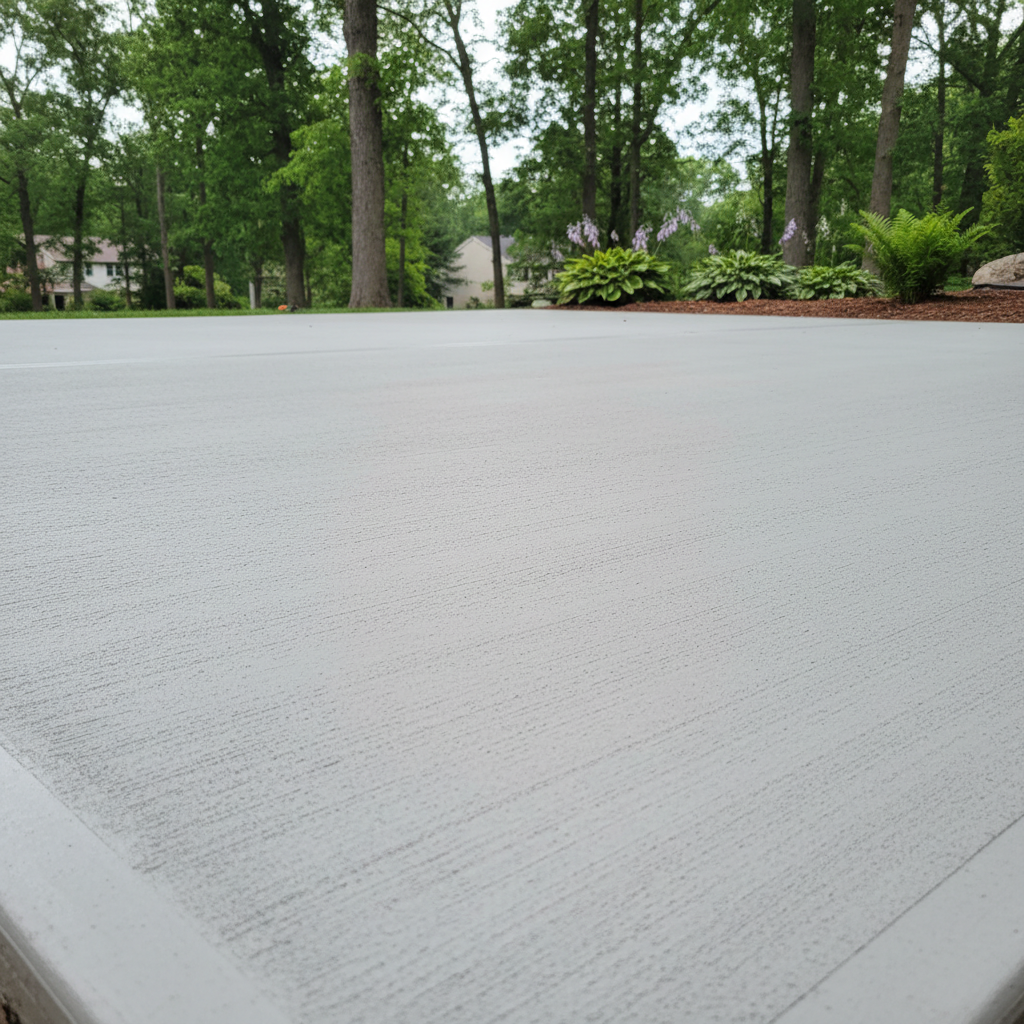
- Finishing. This is where the art comes in. Depending on the desired finish (broom finish for traction, smooth trowel for indoor floors), you'll use different tools. This is also where most DIYers really struggle. Get it wrong, and your surface can be too slippery, too rough, or just plain ugly.
After the Pour: Curing is Caring
You're not done when the concrete looks dry. Curing is just as important as the pour itself. Concrete doesn't dry; it cures through a chemical reaction. This process takes time, and it needs moisture.
- Keep it Wet. For at least 7 days, and ideally longer, you need to keep the concrete moist. This means covering it with plastic sheeting, using curing compounds, or misting it regularly. If it dries out too fast, it won't reach its full strength and will be more prone to cracking.
- Protect it. Keep traffic off it for at least 72 hours, and don't park vehicles on a new driveway for at least a week, preferably two.
When to Call a Pro (Like Absolute Concrete Co.)
Look, for a small, non-critical pad or a few stepping stones, a determined DIYer can probably manage. But for anything larger than, say, a 4x4 foot slab, or anything that needs to hold weight (like a driveway or a shed foundation), or anything where appearance really matters (like a patio), you're better off calling in the pros.
Why? Because we've got the right equipment, the experience, and the crew to get it done right, efficiently, and safely. We know the local soil conditions, the permit requirements, and how to pour concrete that will stand up to our Macungie winters and humid summers. We can handle the heavy lifting, the precise leveling, and the perfect finish that's hard to achieve without years of practice.
You might save a few bucks trying to do a big job yourself, but if it cracks in a year, or drains water into your basement, or just looks terrible, you'll end up spending more to fix it than you would have hiring us in the first place. Think about what your time is worth, and what peace of mind is worth. Sometimes, the best DIY project is knowing when to pick up the phone.