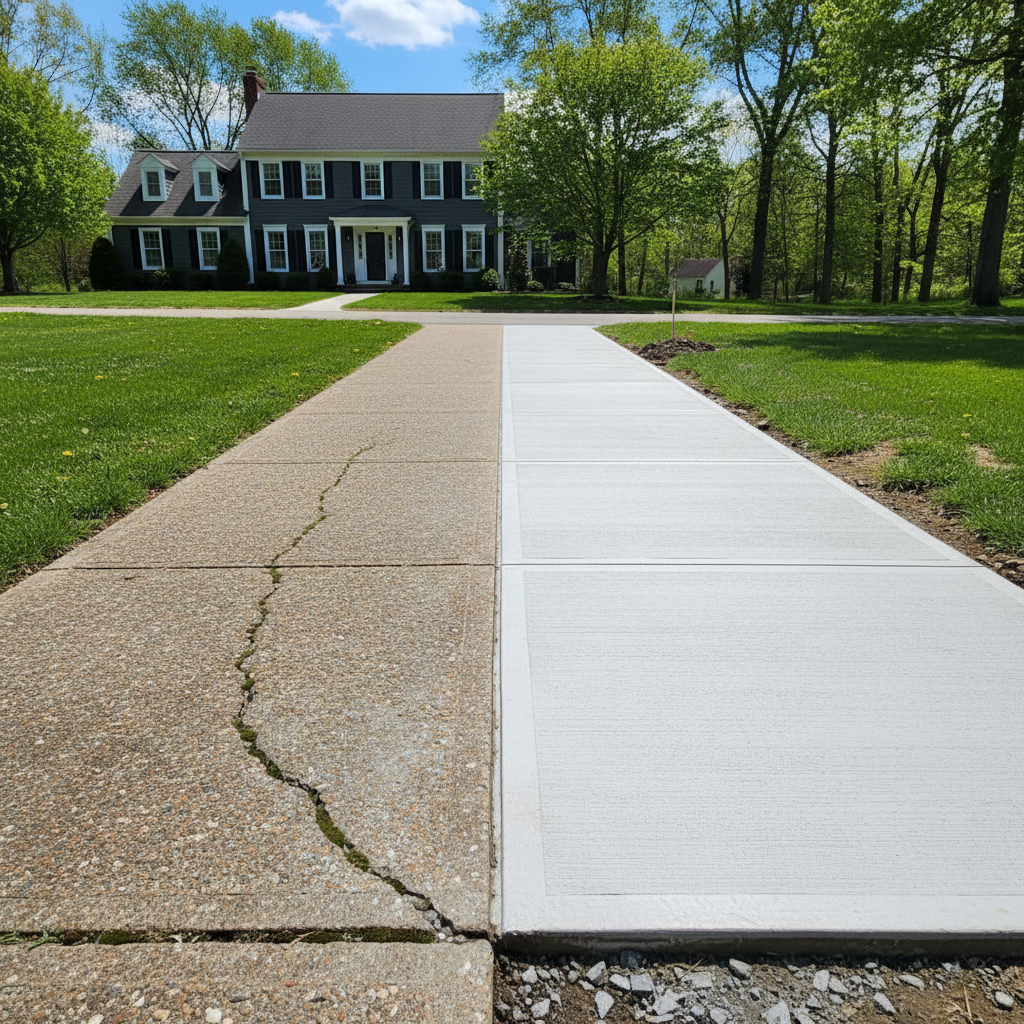
Alright, let's talk sidewalks. You're looking at putting in a new path or replacing an old, cracked one, and you're probably wondering what your best bet is. Most folks narrow it down to two main choices: a classic poured concrete slab or interlocking concrete pavers. Both get the job done, but they're definitely not the same. I've seen plenty of both around Macungie, from the older homes near Main Street to the newer developments on the west side, and each has its pros and cons, especially with our Pennsylvania weather.
Poured Concrete: The Tried and True Option
When you think 'sidewalk,' you're probably picturing poured concrete. It's what we've been doing for generations, and for good reason. It's a solid, continuous surface, and when it's done right, it can last a long, long time. We're talking decades if it's properly installed and maintained.
Cost & Installation
Generally, poured concrete is going to be your more budget-friendly option upfront. The material itself is usually less expensive than pavers, and the installation process, while still requiring skill, can often be quicker for a straightforward path. We pour it, smooth it out, cut some control joints to help manage cracking, and you're good to go. Absolute Concrete Co. has done countless poured sidewalks, and we know how to get a good, durable finish that stands up to our freeze-thaw cycles.
Durability & Maintenance
A well-poured concrete sidewalk is tough. It can handle heavy foot traffic, snow shoveling, and even the occasional light vehicle if it's designed for it. The main thing you need to watch out for is cracking. Even with control joints, concrete can crack due to ground movement, tree roots, or severe temperature swings. If a section cracks badly or heaves, repair usually means cutting out and replacing that whole section, which can be a bit of an eyesore if the new patch doesn't match perfectly. Maintenance is pretty minimal though — just keep it clean and maybe seal it every few years to protect against stains and moisture.
Appearance
Aesthetically, poured concrete is pretty simple. You can get different finishes – broom finish for traction, or a smooth trowel finish – and you can add color or stamp it to mimic other materials, but it's still a monolithic look. It’s clean, functional, and blends in with most home styles, but it doesn't offer the same visual flair as pavers.
Concrete Pavers: Versatility and Style
Pavers are individual units, usually made of concrete, that interlock to create a flexible surface. They've become super popular over the last couple of decades, and for good reason.
Cost & Installation
Here's where pavers usually cost a bit more. The material itself is more expensive per square foot, and the installation is more labor-intensive. Each paver needs to be laid individually on a carefully prepared base of gravel and sand. It takes time to get everything level and ensure the interlocking system works correctly. However, the long-term value often makes up for that initial investment.
Durability & Maintenance
This is where pavers really shine, especially in a place like Macungie where we get some serious ground movement with the seasons. Because pavers are individual units, they can flex and shift slightly with the ground without cracking. If one paver gets damaged, stained, or heaves up due to a tree root or frost, you can usually just lift out that single paver and replace it. That's a huge advantage over poured concrete. Maintenance involves keeping the joints filled with sand (often polymeric sand to deter weeds) and occasionally cleaning. You might need to re-sand the joints every few years, but it's a pretty easy job.
Appearance
Pavers offer a massive range of design possibilities. You can get them in all sorts of shapes, sizes, colors, and textures. You can create intricate patterns, borders, and really customize the look to match your home's architecture and landscaping. From rustic tumbled pavers to sleek modern designs, you've got a lot more creative freedom here.
So, Which One Should You Choose?
Look, both are good options, but for most homeowners in Macungie, especially with our sometimes unpredictable soil conditions and the way our frost heaves can really mess with things, I often lean towards concrete pavers for sidewalks. That ability to repair individual sections easily, and their flexibility with ground movement, just makes them a more resilient choice in the long run.
If budget is your absolute top priority and you're okay with a simpler look, poured concrete is still a solid choice, especially if you've got a stable, well-drained area. But if you want something that offers more design versatility, easier repairs down the line, and can better handle the natural shifts of our local terrain, then pavers are probably worth the extra investment. Give us a call at Absolute Concrete Co. if you want to talk through your specific project. We can help you figure out what makes the most sense for your place.